Introduction
The shop was quiet except for the low hum of Scott’s engraving machine. It was nearly midnight, and he was reviewing a stack of invoices, tariff notices, and Etsy fee statements under the dim light of his workbench. Outside the metal container that served as his production space, the Texas air was warm and still. Inside, the reality of his situation felt heavier with each passing night. The numbers on the page no longer looked like the foundation of a growing business. They looked like a warning.
Only a year earlier, Scott believed he had finally found his path forward. After retiring from the Army with service-connected disabilities following years in combat zones and military medical facilities, he returned home to Texas seeking stability and a renewed sense of purpose. While completing his doctoral studies, he observed a growing need among families searching for affordable and personalized memorials. Traditional monument companies often charged higher prices or required longer lead times, and Scott saw an opportunity to serve others through craftsmanship and reliable service.
Using his military retirement income to support living expenses, he invested personal savings and credit into engraving equipment, granite inventory, and a small production setup on his family’s twenty-acre property. With no employees and no leased space, he kept his overhead low. Etsy provided an accessible online platform with built in traffic, secure payments, and an easy process for customers to request customized designs. The business grew quickly. Scott completed more than 350 memorial orders in less than a year and generated more than 120,000 dollars in revenue. His work earned exceptional reviews, and he reinvested every dollar into the business. He purchased two 40-foot metal containers for granite storage and equipment housing, and developed a streamlined production system that allowed him to manage each order from design to shipment.
By early 2025, the economics of the business shifted significantly. Tariffs on imported granite increased, international freight became less predictable, and Etsy fees continued to rise. Competitors selling lower quality or cheaper materials began lowering prices, which placed pressure on the market. Although Scott maintained strong customer demand and excellent reviews, his margins were shrinking and the long-term sustainability of his business model had become uncertain. As he sat alone in his workshop, Scott recognized that he had reached a critical point. To keep Heart of Texas Veteran Engravings viable, he needed to evaluate new strategic options that balanced financial pressures, operational capacity, and the mission that motivated him from the beginning.
About the Company
Overview
Heart of Texas Veteran Engravings is a veteran owned small business that specializes in personalized granite memorial products. The company operates from Scott’s rural Texas property, where engraving takes place inside a dedicated production building equipped with professional laser technology. Granite inventory is stored separately in two metal containers located on the property. The business is structured as a sole proprietorship without employees or leased facilities, which allows Scott to maintain direct control over production quality while keeping operating costs low. The company has developed a reputation for careful craftsmanship, reliable communication, and respectful service to families experiencing loss.
Mission and Values
The mission of the company is to provide families with meaningful memorials that combine affordability, high craftsmanship, and compassionate service. Scott’s background as a veteran influences the values that guide the business. He views each memorial as a responsibility that requires attentive communication, accuracy in design, and sensitivity to the emotional circumstances of the families he serves. These values are reflected in every stage of the customer experience, from initial conversations to the completion and shipment of the finished piece.
Product Offerings
The company creates a variety of engraved granite memorials that are customized to reflect each family’s preferences. These include flat granite headstone markers used in cemeteries, smaller mini memorial stones designed for indoor or outdoor display, upright memorials, and heart shaped stones. In addition to these core products, Scott produces designs that incorporate religious themes, military symbolism, cultural motifs, and custom artwork. Customers often request photo engravings, portraits, or symbolic images that personalize the memorial. All engraving and finishing work are completed in house, which allows Scott to maintain consistency and ensure that each piece reflects the quality standards that define the business.
Operational Structure
Production occurs inside a dedicated building where Scott completes all design, engraving, finishing, and packaging activities. Granite stones are stored separately in two metal containers, which provide secure and organized storage for inventory while protecting the material from environmental exposure. This arrangement keeps the production environment clean and efficient and reduces the risk of damage to finished or unfinished granite pieces. Scott manages every component of the workflow, including communication with customers, preparation of digital proofs, engraving, cleaning, finishing, quality checks, and packaging for shipment. This structure allows the business to deliver consistent results but also means that production capacity depends entirely on Scott’s time and physical capability.
Platform and Market Position
Etsy is the primary marketplace for the company. The platform provides national visibility, automated payment processing, and an accessible way for customers to submit design requests and upload photographs. Etsy also simplifies administrative obligations by collecting applicable state taxes on each sale. Although the platform supports sales volume and exposure, it also introduces constraints related to fees, search algorithms, and the presence of lower cost competitors. These dynamics influence pricing strategies and shape how the business must position itself to maintain profitability and visibility.
Constraints and Vulnerabilities
While the company benefits from low overhead and direct control over production, it also faces limitations. The business relies entirely on Scott’s labor and expertise, which restricts the number of orders that can be completed at any given time. The use of imported granite exposes the company to tariff changes, shipping fluctuations, and broader global supply chain issues. Additionally, reliance on a single online platform means that changes to Etsy policies or fee structures can significantly affect profitability. These vulnerabilities have become more significant in recent years and now play a central role in Scott’s assessment of the company’s future strategic direction.
Company Operations
Production and Workflow
Heart of Texas Veteran Engravings operates through a single owner production system designed to maintain efficiency, consistent quality, and low overhead. All engraving work takes place inside a dedicated production building on Scott’s family property. This building houses the laser engraving equipment, finishing tools, packing materials, and the workspace needed to produce each memorial from start to finish. Granite slabs are stored separately in two metal containers located elsewhere on the property. This separation between production and storage allows Scott to keep the work environment organized and ensures that both raw materials and finished memorials remain protected.
The production workflow follows a clearly defined sequence that begins when customers place their orders through Etsy. The platform serves as the point of contact where buyers submit customization details, photographs, and inscriptions. Payment processing and state tax collection are handled automatically, which simplifies administrative work. Once an order is received, Scott prepares the design using digital engraving software. Customers receive a proof to review, and adjustments are made based on their feedback to ensure accuracy before engraving begins.
After design approval, Scott moves to the engraving process. Each memorial is engraved, cleaned, polished, and finished within the production building. The laser equipment allows Scott to achieve fine detail in portraits, religious symbols, and script lettering, while the controlled space helps maintain consistent engraving conditions. Once a memorial has been completed, it is carefully packaged using protective foam and reinforced shipping materials. Scott coordinates shipment through UPS and uses Etsy’s integrated label system to ensure that tracking information is available to customers.
Although this system gives Scott full control over quality and craftsmanship, it also places the entire production burden on a single individual. All tasks related to design, customer communication, engraving, finishing, packaging, and scheduling fall on Scott alone. The business benefits from this direct oversight, but production capacity remains limited by the amount of work Scott can reasonably manage.
Sourcing and Inventory Management
The granite used for production is sourced from international suppliers in regions known for high quality dark granite that performs well in laser engraving. Granite arrives through United States ports and is delivered to the property by freight carriers. Because imported granite is heavy and durable, it can be purchased in larger quantities and stored safely for extended periods. The two metal containers on the property serve exclusively as storage for granite slabs and provide a stable and secure environment that protects the material from weather and damage.
Sourcing granite from international vendors exposes the company to variations in shipping costs, tariff changes, and freight timelines. Scott must balance the desire to purchase larger quantities at lower prices with the need to maintain sufficient cash reserves for operations. Inventory decisions therefore require careful planning because the cost of granite can increase suddenly, and shipments can be delayed or disrupted without warning.
Platform Dependency and Marketing
Etsy is the primary source of customer traffic and serves as the core sales channel for the business. The platform provides national reach, built in search visibility, and automated administrative functions that simplify the buying process for families seeking personalized memorials. Etsy collects state sales taxes, processes payments, and facilitates communication between buyers and sellers.
However, dependence on a single platform creates operational and strategic vulnerabilities. Etsy charges transaction and processing fees that reduce Scott’s net earnings, and fees can increase when orders originate from offsite advertising. Product visibility is influenced by Etsy’s internal search algorithm, which can change at any time and significantly affect how many potential customers see Scott’s listings. Competition on the platform also introduces pricing pressure, particularly from sellers offering lower cost or lower quality products. Scott does not operate a separate website or engage in advertising outside of Etsy. Although this simplifies operations, it increases reliance on platform policies and limits the company’s ability to diversify its customer acquisition strategy.
Quality Control and Customer Management
The reputation of Heart of Texas Veteran Engravings depends heavily on the accuracy of customization and the quality of engraving work. Scott communicates directly with each customer to clarify design details and ensure that the memorial reflects their expectations. Many buyers are grieving family members, and Scott prioritizes timely responses, detailed design proofs, and clear explanations of the production process. Through this approach, the company has developed a strong record of customer satisfaction that is reflected in reviews and repeat requests.
Maintaining this level of service requires significant time and attention. Scott is responsible for addressing questions, updating customers throughout the production process, and ensuring that every memorial is completed and packaged with care. While this strengthens customer relationships, it also increases the workload on a single operator and limits the company’s potential to scale.
Operational Challenges
Despite the systems Scott has established, the business faces several operational constraints. Production capacity is limited because all work depends on Scott’s individual labor and expertise. Delegation is difficult because engraving requires specialized knowledge and precision that Scott handles personally. Fluctuations in tariff rates and import costs create ongoing uncertainty in material pricing, making it challenging to maintain consistent margins. Fees associated with Etsy reduce net income and add pressure to already tight profit margins. Finally, because Scott finances inventory through personal funds and reinvested revenue, he has limited ability to purchase granite in bulk even when prices temporarily fall. These operational realities require careful consideration as Scott evaluates potential strategic changes that balance financial sustainability with the mission driven purpose of his work.
Industry Overview
The memorial products industry in the United States includes a wide variety of suppliers, engravers, wholesalers, funeral homes, installers, and online retailers who provide headstones, grave markers, and personalized remembrance items. Traditional monument companies continue to operate with physical showrooms and local installation services, yet a growing portion of the industry has shifted to online platforms that allow consumers to order customized memorials directly from independent engravers. This shift has expanded consumer choice and increased competition, particularly in the segment of personalized granite memorials.
Dependence on Imported Granite
A substantial share of granite used in United States memorial products is imported from international suppliers, especially from China and India. These regions produce granite with the consistency, hardness, and finish required for high quality laser engraving, which makes them essential to many small engraving businesses. This reliance creates significant vulnerability for small operators. Tariff changes can directly affect the cost of imported granite and have increased sharply in recent years. International logistics are subject to delays, rising freight costs, and port congestion, any of which can disrupt access to inventory. Supplier concentration also limits the negotiating ability of small engravers who often depend on a few overseas vendors for consistent supply and quality. Even modest fluctuations in tariffs or shipping costs can reduce operating margins for small businesses, leaving them exposed to financial instability.
Rise of Online Selling Platforms
Online marketplaces have become a major force in the memorial sector. Platforms such as Etsy, Amazon Handmade, and specialized memorial websites attract families seeking personalized designs, fast communication, and transparent ordering processes. Etsy in particular has become a preferred platform because it provides an intuitive customization interface and access to a large community of buyers who value handmade and personalized items. While these platforms expand reach, they also introduce uncertainty. Listing visibility depends on search algorithms that change regularly. Platform fees reduce the amount sellers receive from each transaction. Competitive pricing on large platforms can push margins downward. Changes in policies or promotional systems can affect sales volume with little notice. For independent engravers who rely on a single online platform, these shifts can create operational and financial challenges.
Competitive Landscape
The competitive environment for engraved memorial products includes low cost sellers, traditional monument companies, and independent online engravers. Low cost sellers often operate with minimal customization and focus on high volume, which places downward pressure on platform prices. Traditional monument companies usually maintain higher overhead and in person service models, which results in higher prices and longer production timelines. Independent engravers like Scott occupy an increasingly relevant middle space. They operate with lower overhead than traditional brick and mortar businesses and provide far more customization than low cost sellers. Their competitive advantage generally lies in personalization, communication, and the emotional sensitivity they bring to the customer experience. Because memorial purchases are both emotional and time sensitive, families often prioritize trust and craftsmanship over the lowest available price, which can favor independent engravers who maintain high service standards.
Regulatory and Policy Environment
Government regulation of the memorial products industry is limited, although cemeteries often enforce installation standards for specific marker types. The most significant regulatory factor affecting the industry is federal tariff policy on imported granite. Since 2018, tariffs on Chinese granite have risen dramatically from low single digit percentages to more than twenty five percent, and in some periods even exceeded one hundred percent when combined with retaliatory measures. These sudden increases have immediate effects on material costs for small engraving businesses that rely on imported granite. Because many of these businesses operate with limited cash reserves and depend on consistent pricing for profitability, abrupt tariff changes can severely disrupt their operations and force rapid adjustments in pricing or sourcing (Amiti et al., 2019).
Overall Industry Outlook
Despite these challenges, overall demand for memorial products in the United States remains steady due to consistent mortality rates and a growing interest in personalized remembrance items. Families increasingly seek memorials that reflect individual identity, cultural heritage, or personal symbolism, which supports ongoing demand for custom engraving services. At the same time, competition continues to intensify as more sellers enter online marketplaces. Small businesses face ongoing pressure from tariff volatility, rising shipping costs, platform dependency, pricing competition, and heightened expectations for customization and quick turnaround times. For business owners like Scott, long term success requires careful management of supply chain risk, sustained commitment to quality, and strategic decisions that support both financial stability and the mission of serving families with care.
Financial Overview
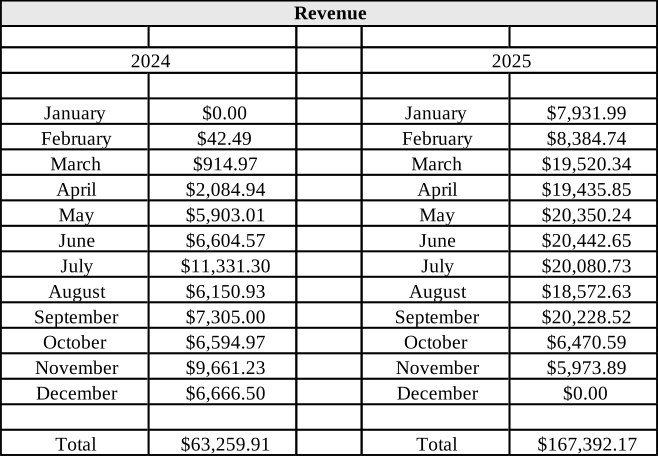
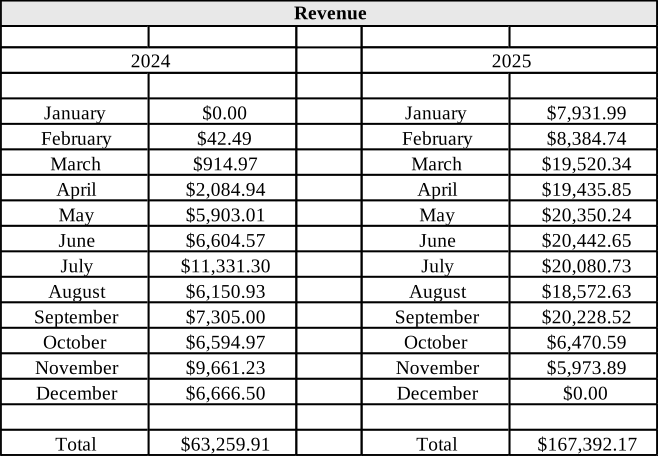
The financial performance of Heart of Texas Veteran Engravings reflects a business experiencing rapid growth while operating in an environment shaped by tariff volatility, international logistics, and platform-based selling constraints. Table 1 presents the company’s revenue for 2024 and 2025, illustrating a significant increase from 63,259.91 dollars in 2024 to 167,392.17 dollars through November 2025. This upward trend demonstrates the strong demand for personalized granite memorial products and the growing visibility of the business on Etsy. Early sales in 2024 were modest, but monthly revenue increased consistently throughout the year, culminating in a peak during November. This pattern reflects the stabilization of Scott’s production processes and a growing customer base driven by positive reviews and consistent turnaround times.
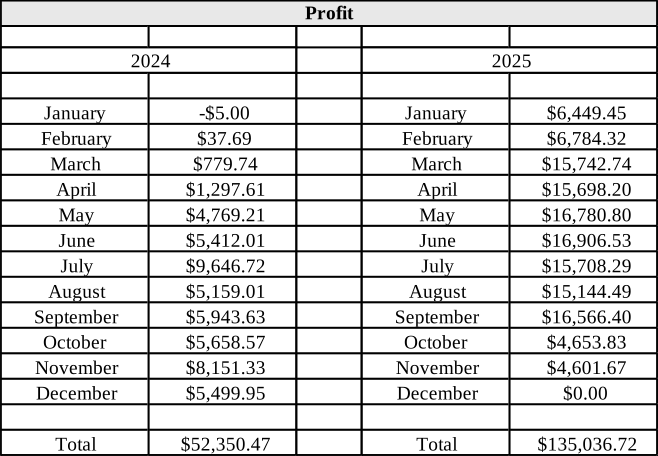
Profitability followed a similar trajectory. As shown in Table 2, profit increased from 52,350.47 dollars in 2024 to 135,036.72 dollars through November 2025. The profit data reveal clear seasonality and improved operational efficiency. Months such as March, April, May, and June of 2025 show profit levels well above fifteen thousand dollars, indicating the company’s ability to meet high order volumes through a streamlined production system. Although December 2025 remains open at the time of reporting, the year-to-date profit already exceeds the entire prior year, demonstrating the strength of the company’s financial position. While the revenue and profit figures show a financially successful and growing business, they also highlight the structural vulnerabilities Scott must consider. The positive financial outcomes occurred during a period marked by increasing material costs driven by tariff fluctuations, rising international freight charges, and the cumulative burden of Etsy fees on each transaction (Schor et al., 2020). The company remains heavily dependent on imported granite, which exposes it to unpredictable changes in cost and availability. In addition, because Scott operates as a sole proprietor without employees, production capacity and customer communication rely entirely on his availability, limiting scalability even during high-demand periods.
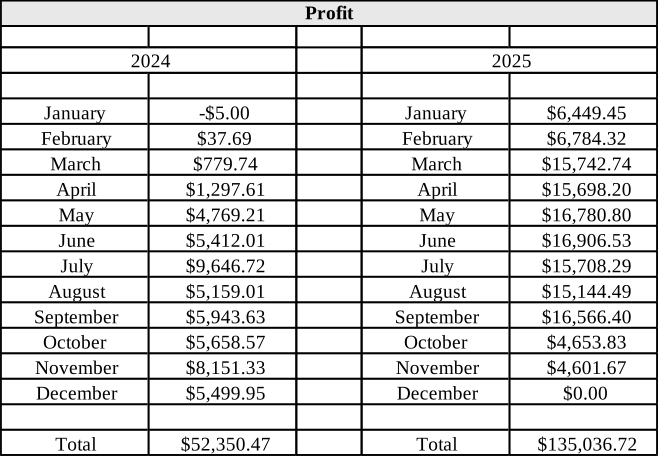
The combined financial data reveal a business that is both promising and fragile. Heart of Texas Veteran Engravings enjoys strong consumer demand and healthy margins, yet the foundation of its financial performance remains sensitive to external pressures and operational constraints beyond Scott’s control. These realities frame the central challenge of the case. Scott must determine whether the current approach can sustain long-term growth or whether a shift in strategy is required to protect the stability of the business while honoring the mission that guides his work.
Charting the Next Move
Although Heart of Texas Veteran Engravings experienced strong financial performance through 2025, the company’s dependence on imported granite, rising tariff exposure, and the physical limits of a single-owner production model created uncertainty about the business’s long-term stability. The revenue and profit trends in Table 1 and Table 2 suggested a healthy enterprise, yet Scott recognized that future success required choosing a strategic path that balanced growth potential with operational feasibility. He identified three primary options.
Option 1: Stockpile Inventory
With granite tariffs rising at the beginning of 2025, Scott considered purchasing large quantities of headstones while prices remained manageable. His twenty-acre property and paid-off forty-foot storage containers gave him ample space to hold excess inventory. Stockpiling offered several potential advantages. It could protect the business from future price increases, reduce the impact of international freight volatility, and ensure consistent production schedules even when suppliers experienced delays or shortages. At the same time, this approach required a significant upfront investment and would tie up a large portion of the company’s available cash. Expanding inventory also created the risk of holding materials that might not align with future customer preferences or design trends, limiting Scott’s flexibility to adapt if the market shifted.
Option 2: Drop-Shipping
A second option involved offering drop-shipping services to other online memorial sellers. Many new entrants into the Etsy memorial market lacked the equipment, skills, or storage capacity to produce engraved stones themselves. Scott could leverage his production system to engrave, package, and ship stones directly to customers on behalf of these sellers. This model offered opportunities to generate revenue with minimal marketing expenses and could position Heart of Texas Veteran Engravings as a specialized vendor within a growing niche. However, adopting a drop-shipping model would add operational complexity. It required reliable quality control, coordination with external sellers, formal service agreements, and mechanisms for tracking orders throughout fulfillment. It also introduced reputational risk if third-party sellers provided inaccurate product descriptions or inconsistent communication with customers.
Option 3: Refine Product Line
The third option involved narrowing the range of offerings to focus on premium, high-margin memorials. Certain product types, such as flat granite headstones and specialized mini memorials, consistently generated higher margins relative to production time and material use. Concentrating on these items would simplify operations, reduce production variability, and allow Scott to allocate more time to quality enhancement and customer engagement. A more focused product portfolio could strengthen brand identity and improve capacity management during peak sales periods. The tradeoff could be a potential decline in overall order volume if customers seek designs not included in the refined portfolio. This strategy required Scott to determine whether emphasizing premium offerings would increase the average transaction value enough to offset the loss of lower-margin but high-volume items.
Conclusion
This case highlights the challenges faced by small business owners operating in industries shaped by global supply chains, fluctuating import costs, and shifting consumer expectations. While Heart of Texas Veteran Engravings experienced significant growth and strong financial performance, rising tariff exposure, freight volatility, and the limitations of a single-owner production model introduced uncertainty about its long-term sustainability. Scott must choose a solution that addresses these pressures while preserving the company’s financial stability and mission-driven commitment to quality. Implementing too many changes could increase operational strain or alter the character of the business, yet not implementing enough changes may leave the company vulnerable to future cost shocks. The decision now rests in determining which strategic path will best position the business for continued success.